Proper porta potty placement on a construction site isn't just a convenience — it's an OSHA requirement. Poorly placed portable restrooms can lead to safety hazards, wasted work time, and even regulatory fines. Whether you're managing a high-rise project in Downtown Atlanta or a residential build in Brookhaven, strategic placement keeps your crew productive and compliant.
At Elevate Porta Potty Rental Atlanta, we deliver and set up porta potties on construction sites across the Atlanta metro area every day. Here's what we've learned about optimal placement.
OSHA Requirements: The Non-Negotiables
Beyond the count requirements, OSHA mandates that toilet facilities be "reasonably accessible" to workers. While no specific distance is stated, the accepted interpretation is within a 5-minute walk — roughly 500 feet from any active work zone.
Failing to comply can result in fines ranging from thousands to tens of thousands of dollars per violation. More importantly, adequate restroom access is a basic worker welfare requirement.
The 7 Rules of Construction Site Porta Potty Placement
1. Within 500 Feet of Every Work Zone
Workers shouldn't have to cross the entire site to use the restroom. For large sites, distribute standard porta potties at multiple locations rather than clustering them all in one spot. Our Music Midtown deployment used a similar multi-zone approach for over 75 units.
2. On Level, Stable Ground
Porta potties must sit on flat, firm ground. Avoid soft soil, gravel slopes, or areas prone to flooding. If the best location has uneven terrain, use plywood sheets or concrete blocks to create a stable, level base.
3. Away From Active Hazard Zones
Never place units under crane swing paths, near excavation edges, in traffic lanes for heavy equipment, or within fall zones. A minimum 25-foot buffer from active hazards is recommended.
4. Accessible for Servicing Trucks
Our service trucks need a clear path to reach each unit for pumping and cleaning. Units tucked behind scaffolding or blocked by material staging will miss service visits. Ensure at least 10 feet of clearance around units and a drivable path from the site entrance.

Optimal porta potty placement zones on a typical construction site
5. Near Break Areas (But Not Too Close)
Workers naturally gravitate toward restrooms during breaks. Place units within 100 feet of break and lunch areas — but not directly adjacent. A 30-50 foot buffer between eating areas and restroom units maintains hygiene standards.
6. Sheltered From Wind When Possible
Atlanta's occasional strong winds can topple unsecured units. Position porta potties against a building wall, fence, or wind break when possible. For exposed sites in areas like Midtown, we can provide tie-down stakes.
7. Include at Least One ADA Unit
If your site has any workers or visitors with mobility impairments, at least one ADA-compliant porta potty is required. ADA units are larger and need extra clearance — ensure a firm, level approach path at least 36 inches wide.
Special Considerations for Atlanta Construction Sites
Summer Heat (May–September)
Atlanta's hot, humid summers mean porta potties heat up fast in direct sun. Place units in shaded areas when possible — under trees, next to buildings, or on the north side of structures. More frequent servicing (twice weekly minimum) prevents odor buildup in the heat.
Rain and Drainage
Georgia's thunderstorm season can turn unprepared sites into mudpits. Never place porta potties in low-lying areas where water collects. Position them on slightly elevated ground or use gravel pads to prevent sinking.
Urban Sites with Limited Space
Tight construction sites in Inman Park or Old Fourth Ward may lack room for multiple ground-level units. In these cases, consider:
- Deluxe flushable units that provide a better experience in less space
- Vertical placement on upper floors with holding tank systems
- Rotating service schedules with more frequent pumping on fewer units
Placement Checklist for Site Managers
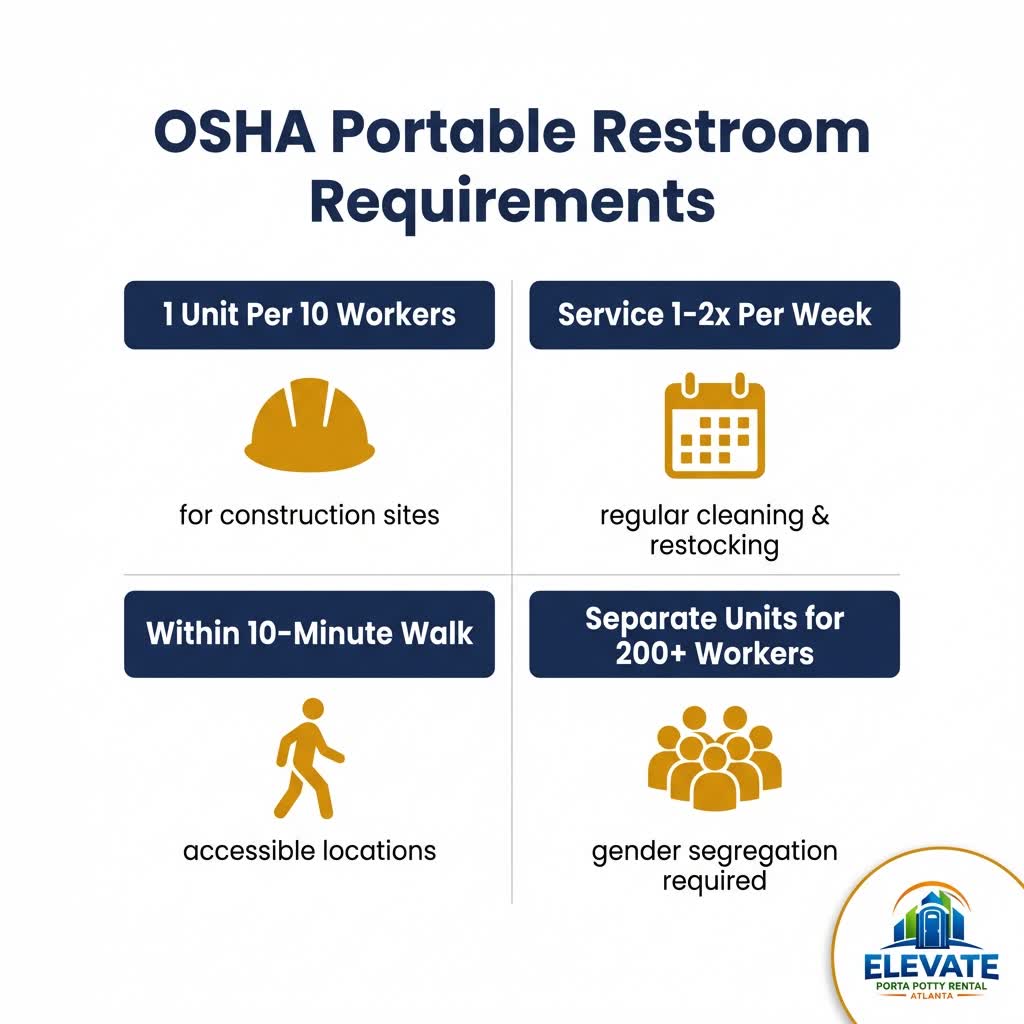
OSHA compliance checklist for construction site portable restroom placement
- ✅ Count workers → calculate unit quantity (1 per 20 workers)
- ✅ Map work zones → ensure every zone is within 500 feet of a unit
- ✅ Identify level ground → avoid slopes, soft soil, flood zones
- ✅ Check hazard clearances → 25+ feet from active hazards
- ✅ Plan service access → clear 10-foot path for pump trucks
- ✅ Position near break areas → 30-50 feet buffer
- ✅ Include ADA unit → at least one per site
- ✅ Add hand wash stations → near restroom clusters and food areas
- ✅ Schedule servicing → weekly minimum, twice weekly for 10+ workers per unit
Need Porta Potties for Your Construction Site?
Elevate Porta Potty Rental Atlanta delivers, sets up, and services units across the Atlanta metro area. We'll help you plan the perfect placement.
📞 Call (470) 852-9183 for a Free QuoteHow Many Units Does Your Site Need?
Use our handy guide on how many porta potties you need — it covers construction sites alongside events. Or check our comparison of standard vs deluxe vs luxury restrooms to pick the right unit type for your crew's comfort level.
For large commercial projects in areas like Buckhead or near event venues, we can also coordinate around scheduled events to avoid conflicts. Our team at Elevate Porta Potty Rental Atlanta handles the logistics so you can focus on building.
Frequently Asked Questions
Industry best practice is within a 5-minute walk (approximately 500 feet) of any work area. This minimizes lost productivity while keeping units accessible.
OSHA standard 29 CFR 1926.51(c) requires a minimum of 1 toilet for every 20 workers. For sites with 200+ workers, 1 toilet and 1 urinal per 50 workers is permitted.
They should be placed on level, stable ground. If terrain is uneven, use plywood or leveling blocks. Avoid slopes greater than 5 degrees.
Standard servicing is once per week. High-traffic sites with 10+ workers per unit should be serviced twice weekly. Elevate Porta Potty Rental Atlanta offers flexible schedules.
If any workers or visitors have mobility impairments, ADA-accessible units are required. Many contractors include at least one ADA unit as standard practice for compliance.